Carylon Ross is a freelance journalist specializing in modern lifestyle news and information. Her story features include the current trends in Smart Homes, Fresh Produce Restaurants, and affordable luxury vacations. Carylon's professional background is in television news and production. She is studying New Media Journalism in the Master of Arts degree program at Full Sail University.
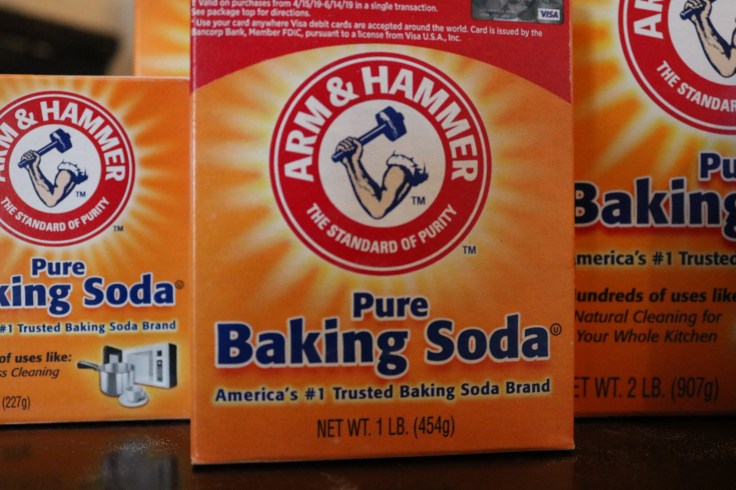
A consumer’s testimony about using baking soda for more than 30-years, attests to its consistent quality throughout time.
From health treatments to baking, cooking and cleaning, baking soda covers the gamut for home remedies and is known as a panacea used worldwide. This seemly magic powder began being produced on a large-scale in the 1860s.
Like many consumers today, Quin Fortune uses baking soda in a number of ways but most often; she uses it daily to brush her teeth. “I have always had this thing about white teeth. Even as a child,” Quin said. “I never could accomplish that until she told me what she did.” Quin is talking about someone she admired for having beautiful teeth and a beautiful smile. (Listen to her story on podcast: )
Finding a simple, natural, and inexpensive product that works as well as any top product on the market today, is certainly a great find. Baking soda is a long standing well performing product that does all the work so you don’t have to.
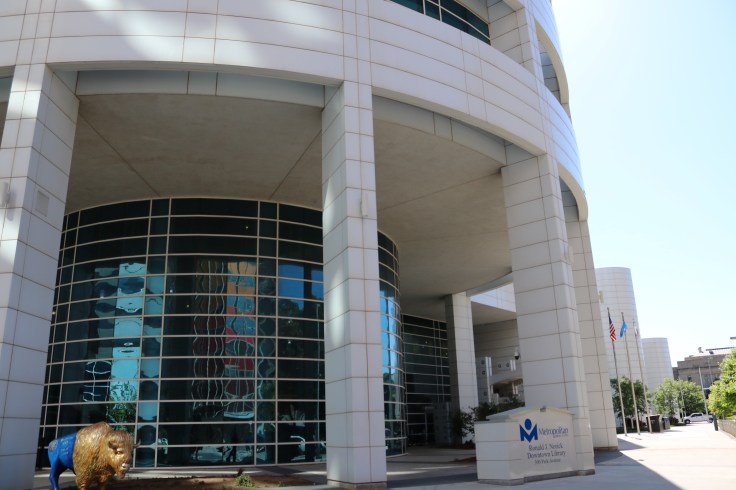
Metropolitan public libraries have been a resource cornerstone regionally and nationally for many decades in the United States. The library that serves as the cornerstone in Oklahoma City is the Ronald J. Norick Downtown Library. As part of the MAPS construction program, the state-of-the-art facility was completed in 2004. The library houses an auditorium, classrooms, an event room, study cubes, and a multitude of books and online resources.
Library curator, Abigail Stout, says the library is not just books anymore. “We’re really a community hub. People come here for internet, they come here for story-time, they come to study with their classmates. It’s really a fun place to be.” Abigail adds, “the library provides digital and downloadable content and all types of e-media; we have music CD’s, we have launch pads, you can actually stream movies online.”
Join in and support your local libraries; the experience is worth the trip!
Prior to the civil rights act, African Americans thrived in their communities. They were living self-sufficiently, working, and shopping in their own neighborhoods. Race relations hindered their movement outside of their established geographic areas.
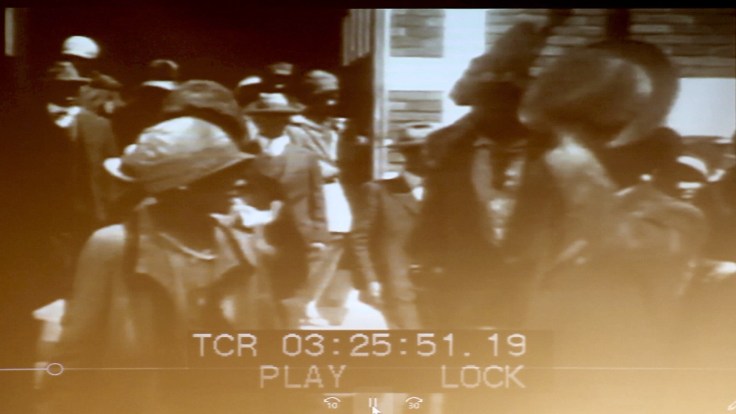
The Oklahoma City Metropolitan Library featured Bruce Fisher as one of the lecturer discussing urban renewal. In Fisher’s presentation, he revealed rare footage from 1929. “The truth is in the images,” he said. “The footage was from a man named Solomon Sir Jones. Hopefully, the footage would discard the negative images of African Americans.” The clips showed well-dressed African Americans in attendance to a spelling bee. Other clips revealed grand churches, community businesses, and automobile ownership.
The Housing Act of 1961 added amends to increase the money authorization of the Federal Housing Administration (FHA). The amends made changes to the National Housing Act that gave the federal government the authority to pay cities to reconstruct old properties. This new property construction project was termed urban renewal.
The Oklahoma Historical Society published that during that time, Oklahoma City’s land and property concerns were more about expansion rather than rebuilding inner-city properties. Many Oklahoma towns smaller than Oklahoma City refused urban renewal and today, some people may feel a loss because of the urban renewal projects.
The Civil Rights act of 1964 involved labor laws in the United States. The law prohibits discrimination based on race, color, religion, sex, or national origin. Fisher says that urban renewal had a devastating effect around the nation andin Oklahoma. “I was part of the organization, the John F. Kennedy project area committee. It was the citizen participation component of the urban renewal authority. We (African Americans) had absolutely no power what so ever,” he said. “But we could voice our resistance to their decision to demolish people’s homes.”
Many people were forced to move from project-targeted areas. “Instead of having a home that you owned in a community that you grew-up in and loved, you were forced to sell your home at fair-market-value and move into another neighborhood that you didn’t particularly want to and could not afford,” Fisher continued.
Although the intent of the civil rights act and the urban renewal projects gave African Americans the opportunity to live and work outside of their communities, many still feel the loss of economic equality that included businesses, jobs, and lowered property values.
Oklahoma City’s Festival of the Arts 2019 is buzzing with a diversity of talented artists performing in the downtown area. The artists are dancers, singers, and musicians performing on multiple of stages and genres including Blues, Folk, Bluegrass, Pop, Rock, and Jazz. It is reminiscent of the Deep Deuce District’s heritage as a booming economic community for African American jazz artists and musicians in the 1940’s – 1950’s. The Deep Deuce District is located north of downtown Oklahoma City’s Entertainment District, Bricktown.
The Deep Deuce District has undergone a nearly 50-year transformation to become what it is today. Before the transformation, this district included homes, apartment buildings, dentists and doctors’ offices along with other African American owned businesses that supported the community.
On the surface, property and profit seem to line the streets of the Deep Deuce District, but for some, there is question about the acquired ownership of district. Bruce Fisher has worked as a retired curator for the Oklahoma Historical Society. He witnessed the effects of the urban renewal projects. “What the race riots did to Black Wall Street is the same as what urban renewal projects did to the Deep Deuce District,” Fisher said.
James Johnson’s grandparents lived and worked in the Deep Deuce District and developed neighborhoods for African American residents. Edwards Edition had the highest concentration of residents with 400 homes; there were approximately 700 homes built throughout the area. Johnson’s grandparents’ home and the Edwards Edition are listed on the National Historic Registry.
It is hard for some to talk about today’s success of the downtown Deep Deuce District without talking about the success of the district’s heritage and the families affected by the transformation.
The spirit that may have been seeded dormant on the streets of the Greenwood District in Tulsa, Oklahoma is now coming alive. The Black Wall Street Gallery’s Conciliation Series is etching its way onto the pages of history. The gallery operates in the first building constructed after the Tulsa race massacre that destroyed every building within a 32-block range.
“We need people who will patronize the businesses,” Wright comments. “I thought with the Conciliation Series, creating a platform for artists, would be a great way for us to start that process.”
The gallery represents more than just black people and black art; it supports a diverse group of new and talented artists and edifices new and unknown artists in the process.
“The list of the damage and the loss. And the map which there’s nothing there,” Atwood stated. “That’s kind of what I was wanting to represent, those lists.”
The corner lot on Greenwood Avenue may seem to serve as a symbol of bringing all people together. It’s unique because it brings attention to the arts rather the businesses that were not represented in the history of the community such as dry cleaners, bankers, lawyers, and restaurants owners.
Ricco Wright had been an intricate influencer in the development of combining art and unity to the historic district and welcomes the ideas of bringing positive change to the community and encouraging the spirit of unity for all people.
Just as each small grain of sand covers the shores of a beautiful warm beach, so are the lives of each divine being on earth. Each life takes many different footsteps and often must take very difficult steps through life.
Jaquie Sherrard has written a book that chronicles the severe tragedies in her life and documents how she is turning the grit to glory. After the death of her father and other unfortunate circumstances, Jaquie was placed in foster care.
According to the Adoption and Foster Care Analysis and Reporting System (AFCARS) the United States had 437,465 children placed in foster care in 2016. For many children that report is a sign of hope, but for Jaquie, it was a sentence to a place where she would have to escape.
“I don’t know how all foster homes are and maybe this is not the case for all, but this particular foster home was absolutely horrible,” Jaquie said. In her book, she refers to her life as a foster child as the encounters of the worst kind. The room where she lived had cracks in the walls and ceiling. There was no heat or air conditioning; she was given a small pan to use the restroom in. “I was only allowed to come out to get my plate at the bottom of the stairs and take it back upstairs and eat,” she commented.
Whittney Hood, with the Dress for Success Oklahoma City Organization, also offers support for women in finding a life of fulfillment. The organization offers resources and training for women in need. “Our goal here is to be much more than clothing, so where as we start with clothing for an interview or for a job, we help ladies with much more than that,” Hood said. The organizations mission includes empowering women to be independent in work and in life. Dress for Success is only one of thousands of women’s help organizations in the state of Oklahoma.
Soundbites from Kidan Hull and Dr. Sohita Ojha sharing their experiences as first generation U.S. citizens.
An American Community Survey reported that there were more than 40 million foreign-born people living in the United States. The U.S. Census Bureau uses the term foreign born to refer to any naturalized U.S. citizen, lawful permanent resident (immigrants), temporary migrant (such as foreign students), humanitarian migrant (such as refugees and asylees), and unauthorized migrants. Latin America has the largest region of birth group with 53 percent.
Living in a foreign country may not be something that many people think about, but for some immigrants and children of immigrants, it could be a challenging experience. Some immigrants have had to face gang violence, death, and the dangers of living on the street.
When Dr. Sohita Ojha, Professor of Biology, traveled to the United State as a graduate student, her first week was confusing. Without the aid and support of people, resources, and organizations, Dr. Ojha feels that her arrival to the United States would have been more difficult. “At that time the International organization use to have immersion programs where they would invite fresh graduate students, International students, to come to the seminars and participate in presentations where they talk about the country,” she said. Dr. Ojha also had the Indian community and American host families to help her learn more about the culture. In Dr. Ojha’s podcast she talks about the availability of her native foods and spices in the United States.
Alicia Keys’ two piano performance at the 61st Annual Grammy Awards this year sparked a notable Facebook buzz. That may be an indicator that audiences still enjoy dueling piano performances. Ragtime piano players began dueling in the late 1890s. Performers would compete to see who’s faster and better.
Over about a fifty-year time span, Pat O’Brien’s Bar in New Orleans and Dallas’ Alley Cats have transitioned the live entertainment to sing-alongs with audience participation. Performers play by request most any genre of songs past and present.
One of Michael Murphy’s featured artists is Sami Davis. Sami studied Audio Production with a vocal emphasis at the University of Colorado, Denver. She has continued studying voice for nine years. Sami said she stumbled into live piano performance about four years-ago. “My love for music and playing music is what keeps me playing,” she said. Michael Murphy’s has more than 15 artists who perform on stage three nights a week.
What’s becoming more popular is off stage dueling piano performances for corporate events, private parties for weddings and birthdays, and for performing arts centers, concerts, and festivals.
Alicia Keys’ performance at the Grammys brought the nostalgia of dueling pianos to center stage and helped remember an extraordinary African American pianist and jazz vocalist, Hazel Scott.
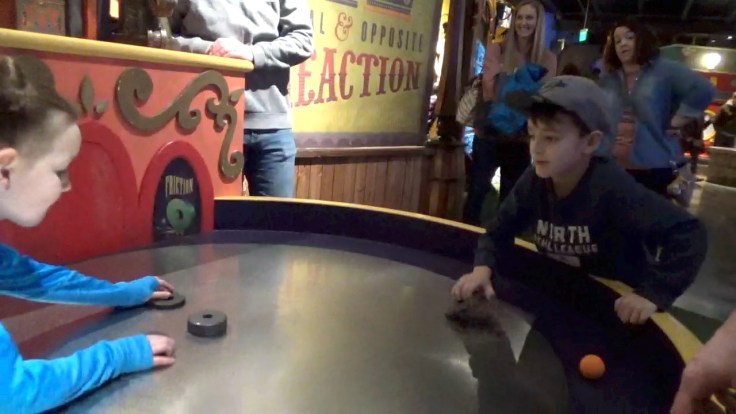
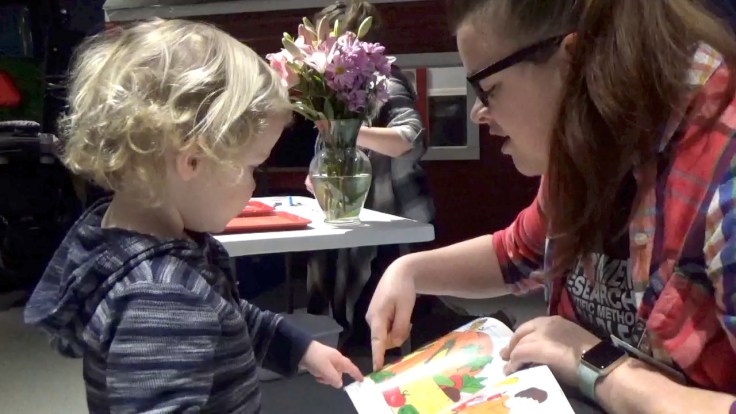
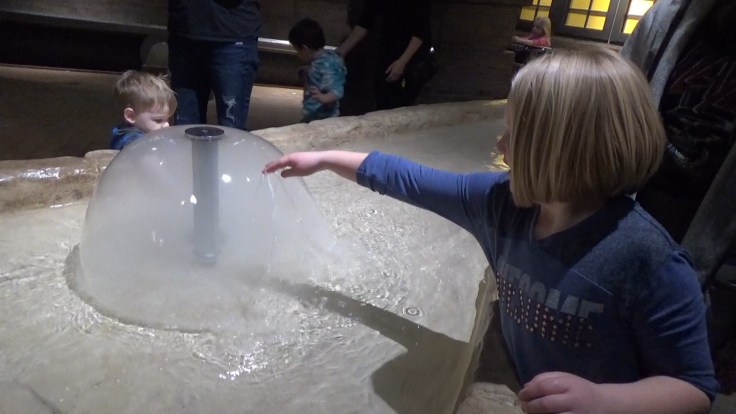
Old fashion play with toys and activities are still important. It gives children an opportunity to develop fine motor skills; it allows them to use their imaginations. If modern children are using technology to learn and play, parents’ concerns may be about how to moderate screen-time and how to make screen-time valuable.
Dr. Marsha Herron believes that technology can serve the same functions as learning by doing. She mentions that technology doesn’t do by itself, it does what we tell it to do. “When you want to teach or engage children in something, it’s up to the adults really to shape and inform the process of learning. Whether it’s through technology, the medium of technology or any other way we choose to teach,” she said.
Some experts may still believe that using educational devices are not the same as participating in active games. The Early Childhood Advisory Council is hard at work to develop quality early childhood care and educational programs. Those plans reflect the importance of early care and education for children.
The unlimited possibilities of virtual reality technology are now popular topics of discussion and a must-have for innovative business leaders. VR is making the leap from science fiction movies to video games and now, to industries of business, medicine, and education.
Virtual Reality gaming is also creating new avenues for the gaming industry. It is quickly changing the way we work, the way we learn, and the way we see the world. VR and VR gaming are not just for entertainment as the concept may have started out to be. Game developers are widening the scope and experience of technology.
VR Warehouse business owner and co-founder Moises De Jesus envisions that medically, virtual reality will be a big thing once it’s fully integrated into society. “There are studies that show how it can help in the medical sector. With Alzheimer’s, if you could trigger a specific memory, you would be able to pool in lost memories”, he said. “There are many facets. VR will eventually merge with AR. Education for example, when you’re reading a book, you don’t know what that looks like but putting on a virtual reality headset, now you can see it, examine it, and study it. It shortens the learning curve.”
De Jesus also says that the original learning of man was visuality; before language, there was visuality and VR is reintroducing that early style of learning. However old, the young generation’s involvement is a key factor to the growth and development of VR gaming. Just as Millennials ushered in social media, they are also driving the use of virtual reality and other technological devices.
Co-founder and partner, Karriem Allah believes VR will filter into all societies. “Picture VR as being at the pioneer stage, the baby stage, and as it develops, it will engulf the whole world,” he states. The VR Warehouse has over 60 games including google earth that allows patrons to visit and see places all over the world.










 Variety News