
From birth to age eight is a critical learning period for a child’s mental, emotional, and social development. The Head Start initiative, that began in 1965, is among the earliest early childhood education programs. It was created to assist children from low income families with access to early education programs.
Today, homeless families are challenged to participate in early education programs. More than 50 percent of children living in homeless shelters are younger than 5-years-old. It is not uncommon for states to enact their own early education programs. New York City is the second city in the United States to offer a full-day of preschool to 3-year-olds.
The expectations and outcomes for children are different for some parents and for some educators. Oklahoma’s Science Museum offers many programs that help engage young minds. Candace Barrios heads the early childhood program, Storytime Science at the museum. In this program, a story is read to children and then they participate in a hands-on scientific activity that has to do with the story.
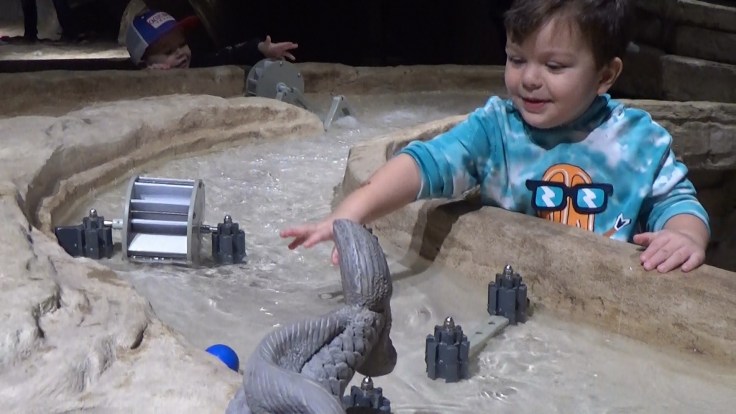
Barrios says that early childhood education has long-term benefits and reflects how well students perform in middle school, high school, and beyond. “Offering opportunities like this will help to wire their brains in order to set them up for future endeavors in school,” she said. “A lot of children don’t necessarily have the opportunity to get experiences like Storytime Science at home and so, it’s very important for the Science Museum to reach out to those families when they’re here and offer those opportunities for them to learn.”
Science Museum Oklahoma also includes an Early Explorers program as part of the early childhood education experience. Researchers and experts agree that learning through play and activity helps children develop multiple motor skills, positive emotional development, mental functions, morals and social skills.
![DSC00123[1]](https://variety.news.blog/wp-content/uploads/2019/02/dsc001231.jpg?w=736)









 Variety News